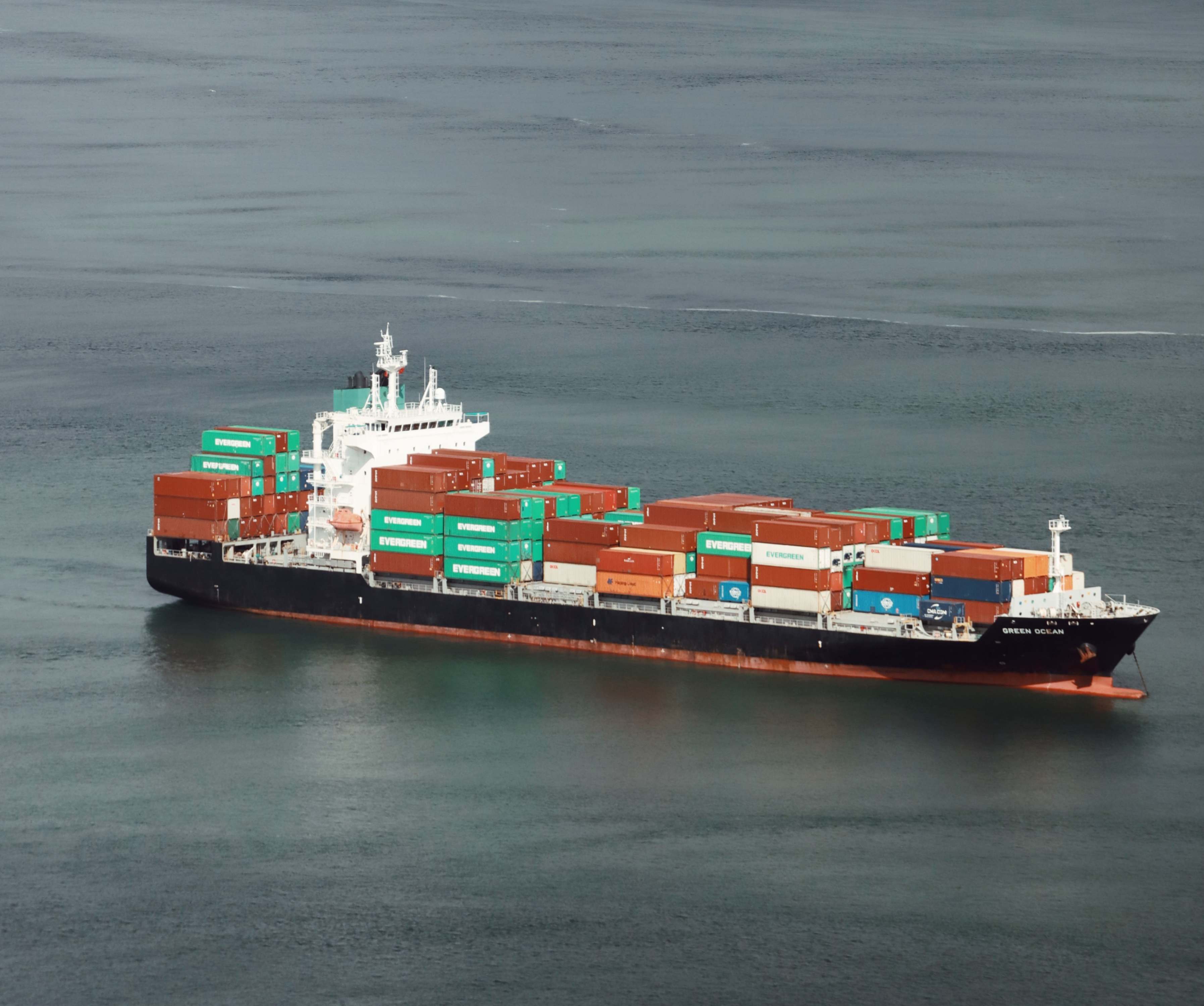
Drop a solid steel ball into water and it sinks. Yet a steel ship weighing thousands of tonnes can float. The answer involves density, water pressure and displacement. Pressure in a liquid increases with depth. The bottom of a floating object therefore experiences greater pressure than parts closer to the surface. The forces produced by this pressure combine to create an upward resultant force called upthrust, or buoyancy. Archimedes' principle states that the upthrust on an object equals the weight of the fluid displaced by that object. A floating ship sinks into the water until it has displaced enough water for the upward force to balance its weight. The ship is made from dense materials such as steel, but its hull contains a large volume of air. The average density of the complete ship—including the enclosed spaces—can therefore be low enough for it to float. When cargo is loaded onto the ship, its weight increases. It must sink slightly farther into the water so that it displaces more water and produces a larger upthrust. This is why the simple rule that "heavy objects sink" is wrong. Huge ships can float while tiny steel balls sink because floating depends on density, displacement and forces rather than mass alone.