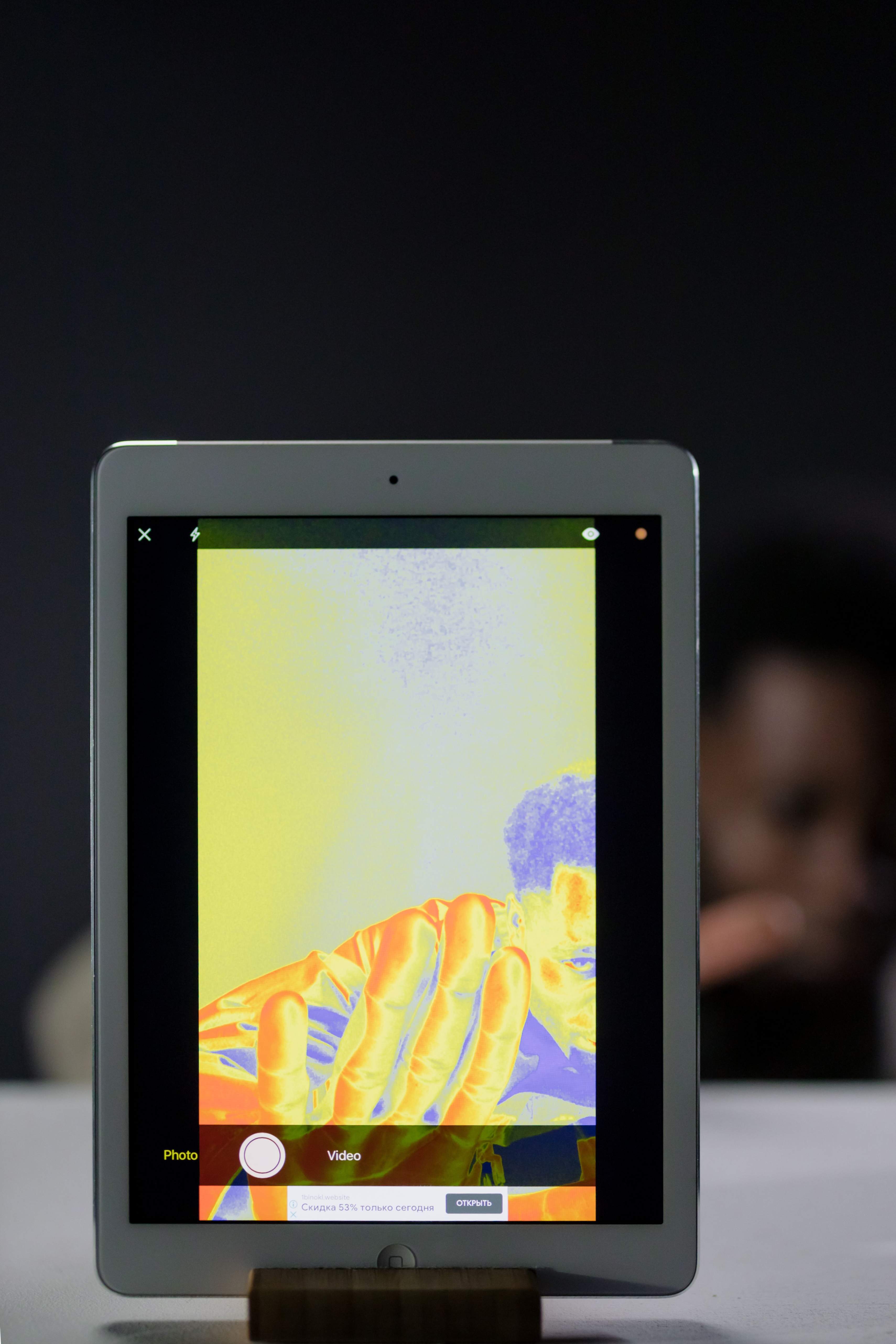
A normal camera needs visible light to form an image, but a thermal camera can reveal a person standing in complete darkness. Instead of detecting visible light, it detects infrared radiation. Infrared is part of the electromagnetic spectrum. Its wavelengths are longer than those of visible red light. Objects with temperatures above absolute zero emit electromagnetic radiation, and objects at everyday temperatures emit much of this thermal radiation at infrared wavelengths. A thermal camera contains detectors that respond to infrared radiation arriving from different parts of a scene. Electronics process these measurements to produce an image. Hotter objects often appear brighter or are assigned colours such as yellow and red, while cooler objects may appear blue or purple. These colours are usually artificial. A hot object is not necessarily actually glowing red or yellow. The colours are chosen by software to make differences in detected infrared radiation easier for humans to see. Thermal cameras are used by firefighters to locate hot objects through smoke, engineers to find overheating electrical equipment, and builders to investigate heat transfer through walls and roofs. They can also help scientists observe animals at night. However, thermal cameras do not measure temperature perfectly simply by looking at an object. Different surfaces emit and reflect infrared radiation differently, so accurate temperature measurements require these effects to be considered. Thermal imaging shows that our eyes detect only a tiny part of the electromagnetic spectrum. Technology can detect wavelengths that are invisible to us and transform them into images we can understand.