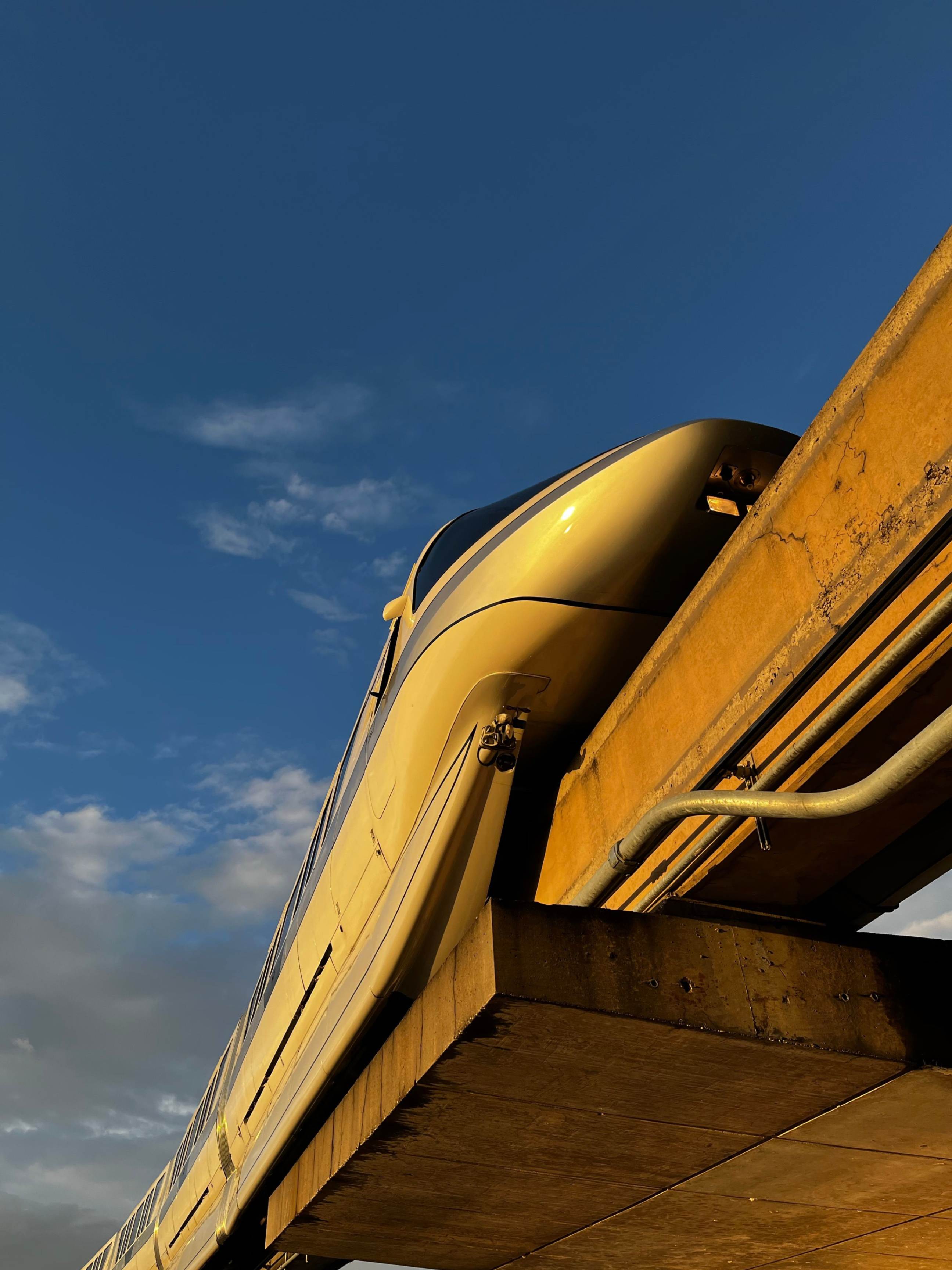
Have you ever entered a building where someone presses a button and a locked door suddenly releases? There may be no person physically moving the lock. Instead, electricity can be controlling a magnetic force. The same relationship between electricity and magnetism can be used on a much larger scale to help support and move high-speed maglev trains. Every magnet produces a magnetic field around it. This field can exert forces on other magnets and on certain magnetic materials such as iron. Permanent magnets produce their magnetic field without needing an electrical supply, but electricity gives engineers another way to create and control magnetism. When an electric current flows through a wire, it produces a magnetic field around the wire. If the wire is wrapped into a coil, the magnetic fields produced by different sections of wire combine. Adding a suitable iron core can make the magnetic effect much stronger. This arrangement forms an electromagnet. Unlike a permanent magnet, an electromagnet can be controlled electrically. Changing the current can change the magnetic field, and switching the current on or off can switch the electromagnet's effect on or off. This is useful in electromagnetic door locks. A powerful electromagnet can be attached to the door frame while a metal plate is attached to the door. When current flows, magnetic attraction can hold the plate firmly against the electromagnet. The control system can then change the electrical supply when the door needs to be released. Magnetic forces can operate on a much larger scale too. Maglev means magnetic levitation. Different maglev systems use controlled magnetic attraction or repulsion to support and guide trains. Because the train can operate without conventional wheels continuously contacting steel rails at high speed, rolling contact and mechanical wear can be greatly reduced. Changing magnetic fields can also be used to propel some maglev trains. Electromagnets along the train and guideway are controlled in sequence so that magnetic forces pull and push the vehicle forwards. Electrical energy is transferred into kinetic energy as the train accelerates. The relationship between electricity and magnetism is also used in electric motors, generators, loudspeakers and many other devices. From releasing a door weighing a few kilograms to moving a train weighing many tonnes, engineers can use electric current to create magnetic forces that can be switched, strengthened and controlled.