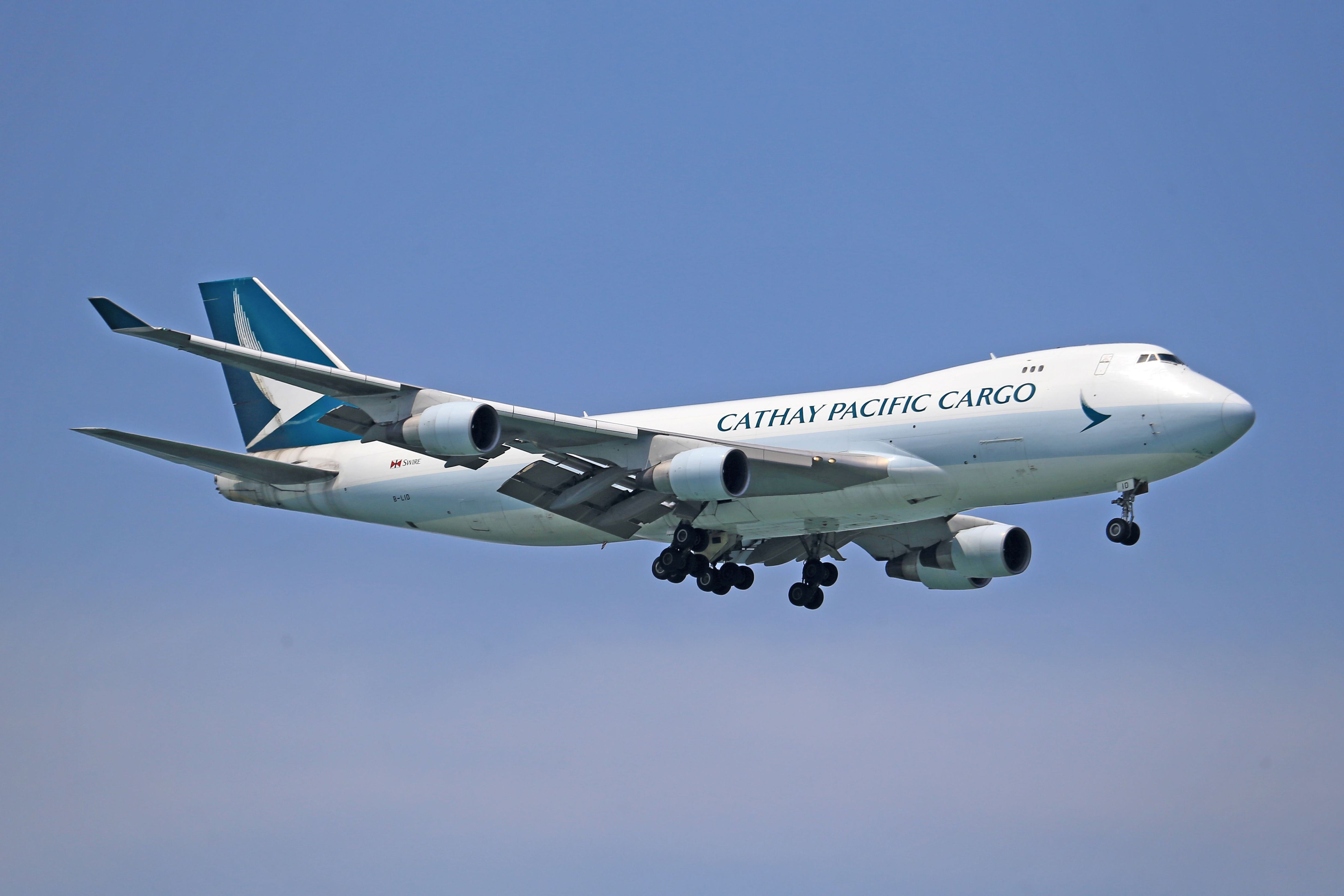
Picture a passenger aeroplane accelerating along a runway. It may have a mass of hundreds of tonnes, yet moments later it can leave the ground and climb into the sky. Flight is possible because several forces act on the aircraft. Its weight acts downward because of gravity, while aerodynamic forces on the wings can provide an upward force called lift. The engines provide thrust to move the aircraft forwards, while drag acts in the opposite direction to its motion. As an aeroplane moves forwards, its wings interact with the surrounding air. The shape and angle of the wings cause the airflow to change speed and direction, producing pressure differences around the wing. The wing also pushes air downwards. Together, these effects produce an upward aerodynamic force. It is sometimes claimed that air travelling over the top of a wing must meet air travelling underneath it at the back of the wing, but there is no physical rule requiring this to happen. For an aircraft flying straight and level at constant velocity, the forces are balanced overall: lift balances weight and thrust balances drag. During take-off, climbing, turning or landing, the forces and the direction of the aircraft's velocity change. Pilots control these changes using engine thrust and movable surfaces on the wings and tail. Lift depends on several factors, including the aircraft's speed, wing area, air density, wing shape and angle of attack. Increasing the angle of attack can increase lift, but only up to a point. If the angle becomes too large, the airflow can separate significantly from the wing and lift can decrease. This condition is known as a stall. Aircraft engineers therefore have to balance competing requirements. Wings must produce enough lift while avoiding unnecessary drag, and the aircraft must be strong enough to withstand large forces while remaining as light as practical. Similar aerodynamic principles are used to design drones, helicopters, wind turbines and racing cars. An aeroplane demonstrates that air can produce enormous forces even though we cannot normally see it. By controlling how air moves around carefully designed surfaces, engineers can make machines weighing many tonnes fly.