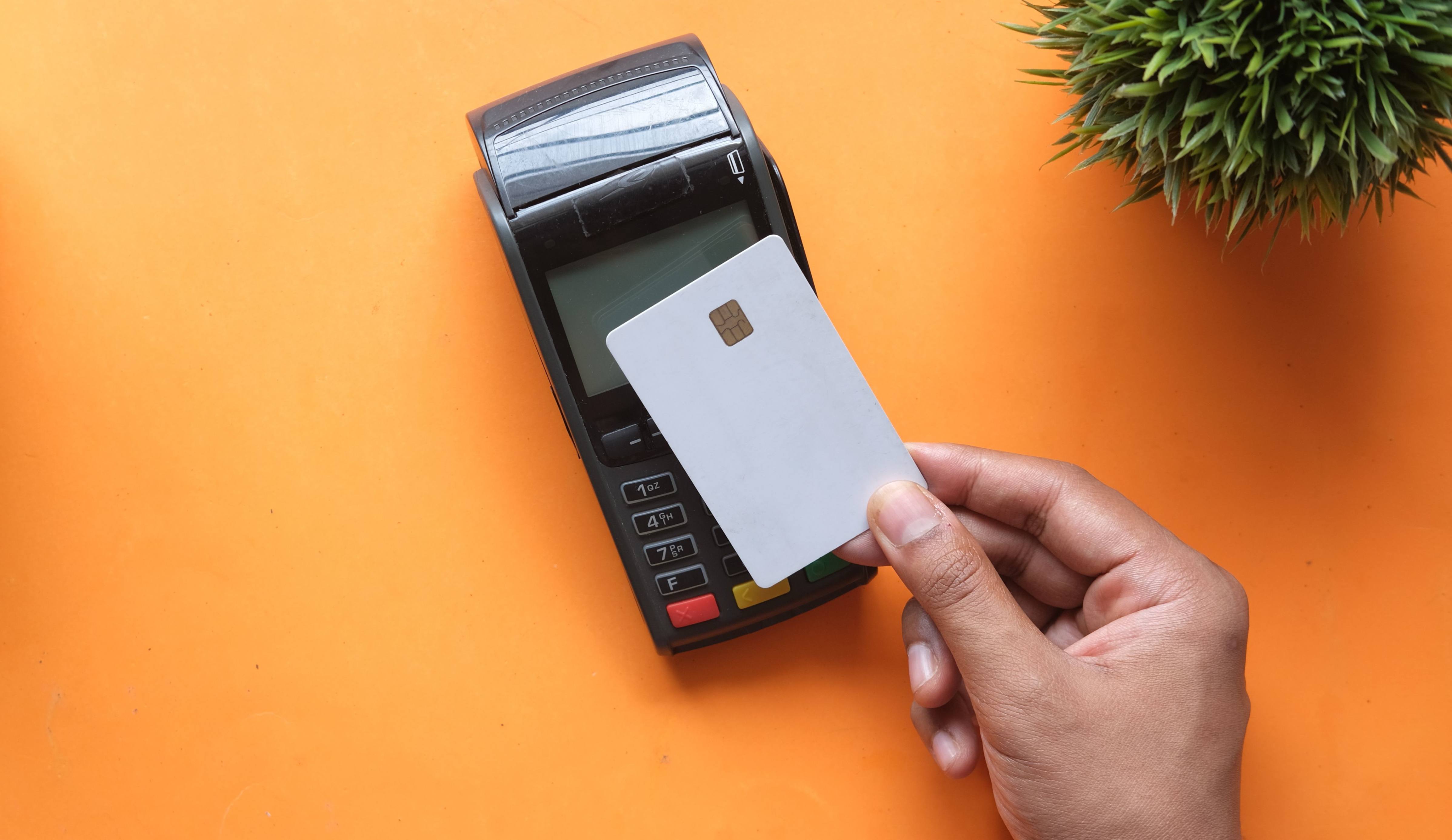
A contactless bank card contains a tiny chip and an antenna but usually no battery. The payment terminal provides the energy needed for the brief conversation. The terminal produces a changing electromagnetic field. This can induce a small potential difference and current in the card's antenna. That energy powers the chip long enough for it to exchange data with the reader using radio-frequency signals. The terminal and banking systems then handle the payment checks. It is a compact real-world application of electromagnetic induction and wireless communication.
Designers have to balance performance, safety and wasted energy. That is why phones manage battery temperature, chargers regulate current, power networks use particular voltages, and appliances carry power ratings. Looking at the label on a real device turns the idea into something measurable rather than abstract.
The key idea is electromagnetic induction. A changing magnetic field through a coil produces a potential difference across it; if the circuit is complete, a current can flow. Increasing the rate of change, the field strength or the number of turns can increase the induced voltage. Transformers, generators, wireless chargers and contactless systems all use versions of this same link between changing magnetic fields and electricity.