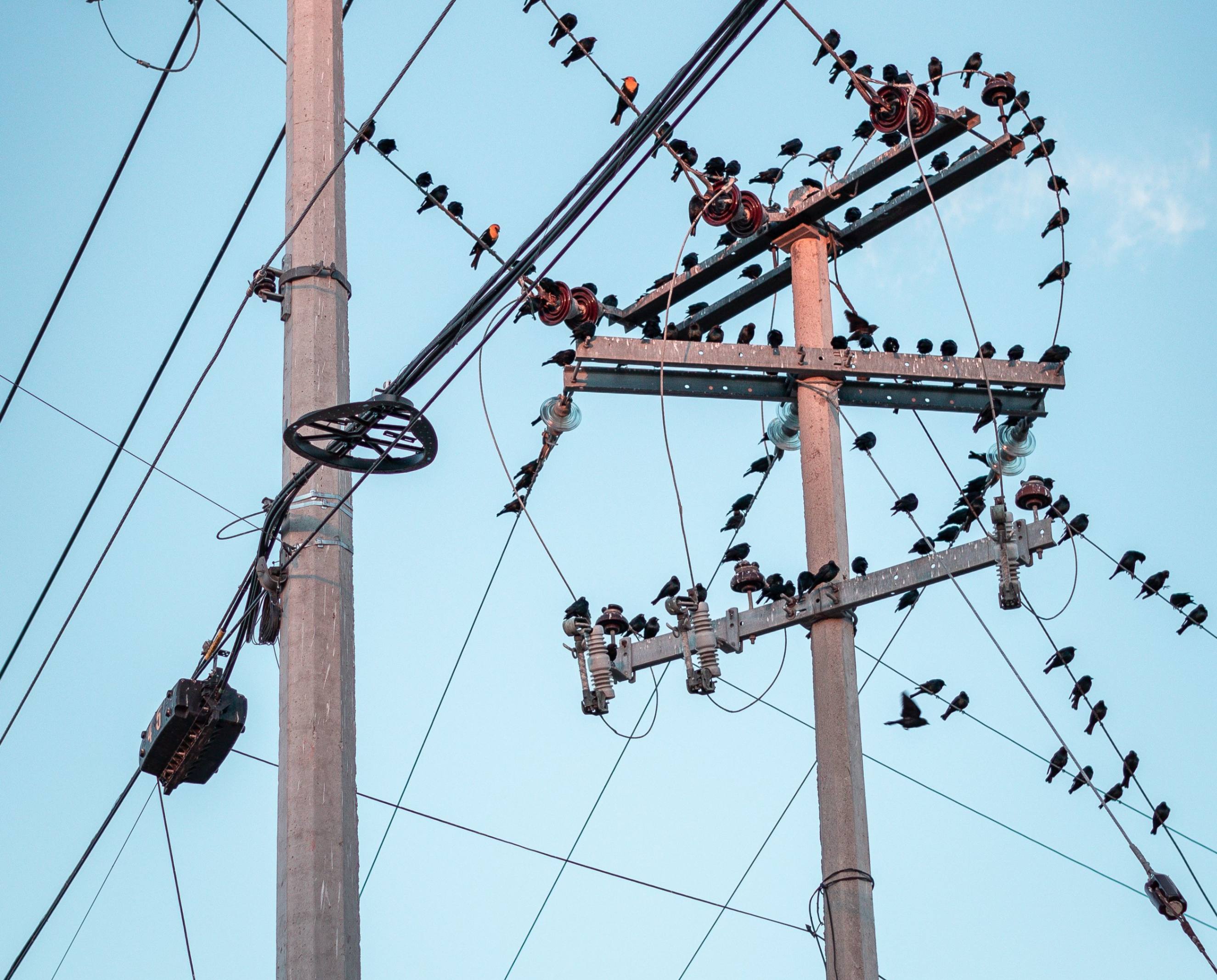
A bird can sit on a high-voltage power line without normally being electrocuted. This does not mean the wire is safe to touch. The explanation depends on the difference between electric potential and electric current. Electric current is the rate at which electric charge flows. For a significant current to pass through an object, there normally needs to be a potential difference between two points on that object and a conducting path between them. When a bird places both feet close together on the same wire, the electrical potential at one foot is almost the same as at the other. The potential difference across the bird's body is therefore very small, so very little current flows through it. The situation becomes dangerous if the bird simultaneously touches two points with substantially different potentials. For example, touching a live conductor and an earthed structure could create a large potential difference across its body. The same principle is why touching electrical equipment while connected to Earth can be extremely dangerous. Current through the human body can cause severe injury, so high-voltage equipment must only be approached by trained professionals using appropriate safety procedures. Electrical engineers use insulation, earthing, spacing and protective devices to prevent dangerous current paths. The bird-on-a-wire example reveals an important lesson: a high voltage at one point does not automatically mean a large current flows through every object touching it. The potential difference across the object and the available path for charge are crucial.