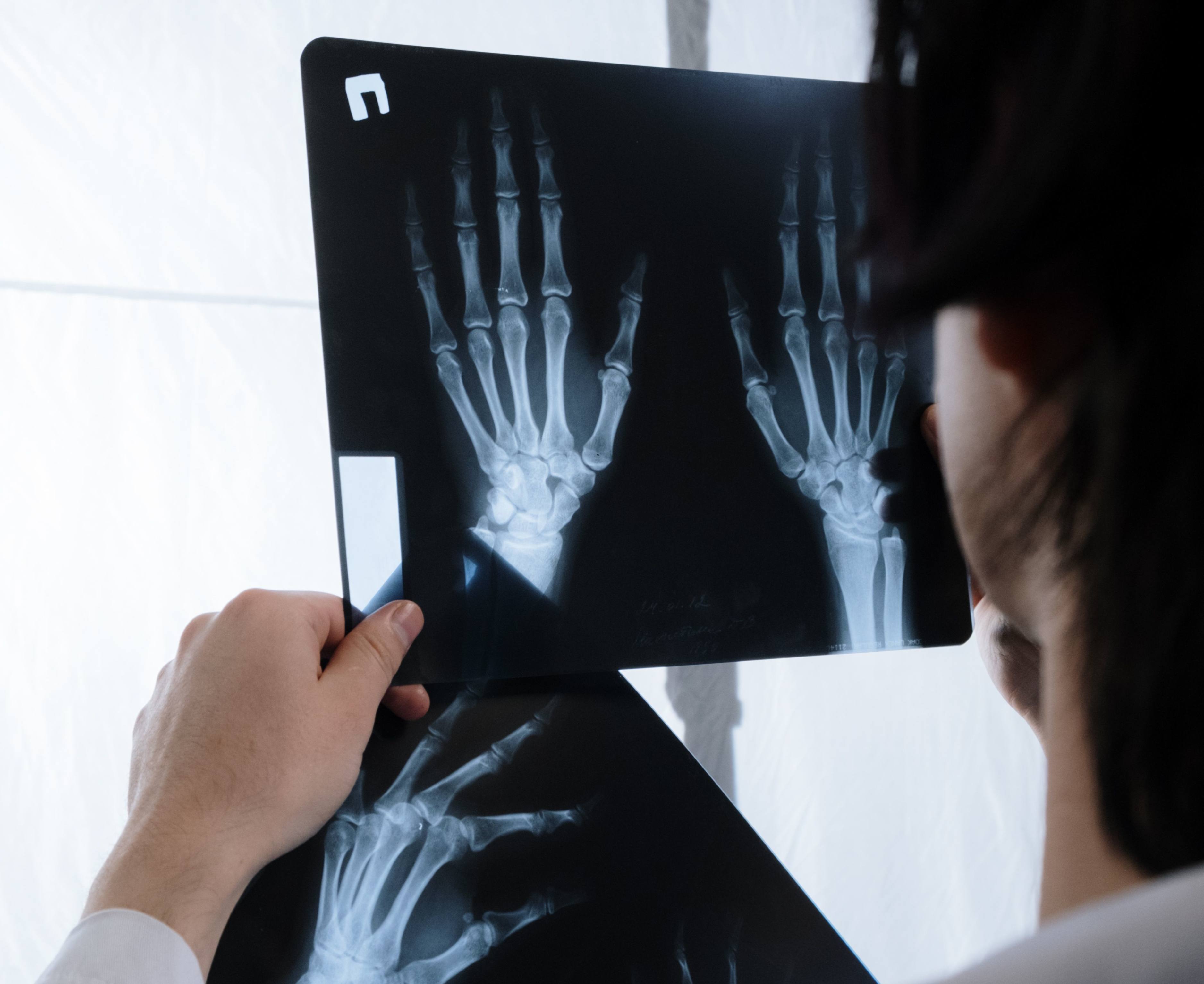
X-rays are high-frequency electromagnetic waves that can pass through some body tissues more easily than visible light can. Different materials absorb X-rays by different amounts. Soft tissue allows a larger fraction of the X-rays through, while dense bone absorbs more. A detector records the pattern of X-rays that emerge from the body. Areas where fewer X-rays reach the detector appear different from areas where more pass through, creating contrast in the image. Very dense materials can absorb strongly and block the beam. X-rays are ionising radiation, so medical imaging uses carefully controlled doses and only when the benefit justifies the exposure.
This is also a design problem. Cameras, glasses, screens, road signs and medical scanners all depend on controlling how electromagnetic waves are emitted, absorbed, reflected or refracted. A familiar object can therefore be a practical example of the same wave rules studied in class.
Waves transfer energy and information without transferring matter from source to receiver overall. Frequency tells us how many oscillations pass each second, wavelength is the spacing between matching points, and wave speed links them through v = fλ. Different frequencies interact with materials differently, which is why engineers can choose particular parts of the electromagnetic spectrum—or particular sound frequencies—for sensing, communication, heating or imaging.