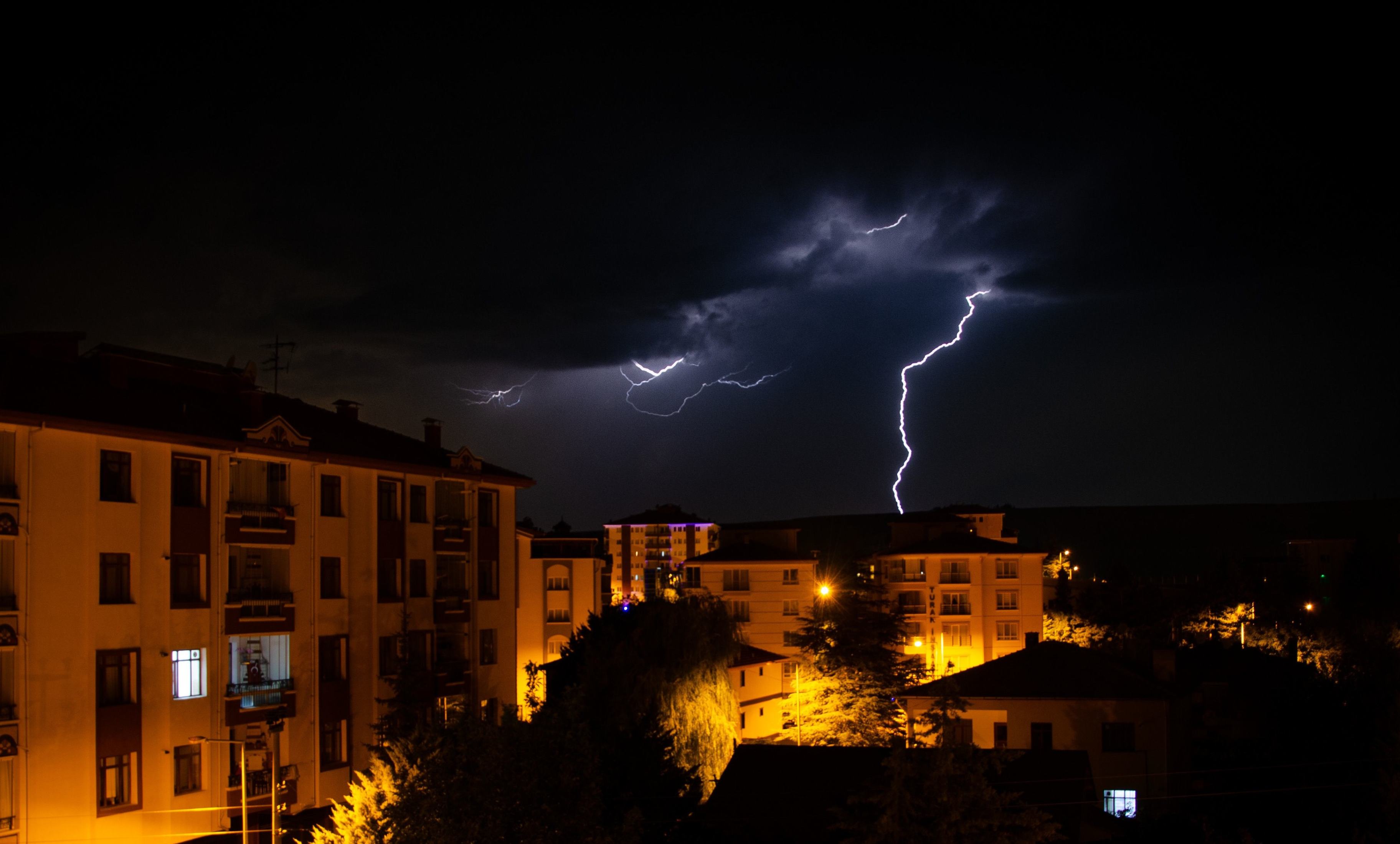
Lightning and thunder are produced almost together, yet the flash usually reaches you first. The reason is the enormous difference between the speeds of light and sound. Light travels at about 300 million metres per second in air. Sound travels through air at only about 340 metres per second. Across the few kilometres between you and a storm, the light arrives so quickly that its travel time is almost unnoticeable. The sound can take several seconds. That delay can even estimate distance. Roughly three seconds between flash and thunder corresponds to about one kilometre from the lightning.
The same physics matters in theatres, classrooms, studios and hospitals. Designers choose shapes and materials to control reflections and unwanted sound, while engineers use microphones and signal processing to measure or deliberately alter waves.
Waves transfer energy and information without transferring matter from source to receiver overall. Frequency tells us how many oscillations pass each second, wavelength is the spacing between matching points, and wave speed links them through v = fλ. Different frequencies interact with materials differently, which is why engineers can choose particular parts of the electromagnetic spectrum—or particular sound frequencies—for sensing, communication, heating or imaging.