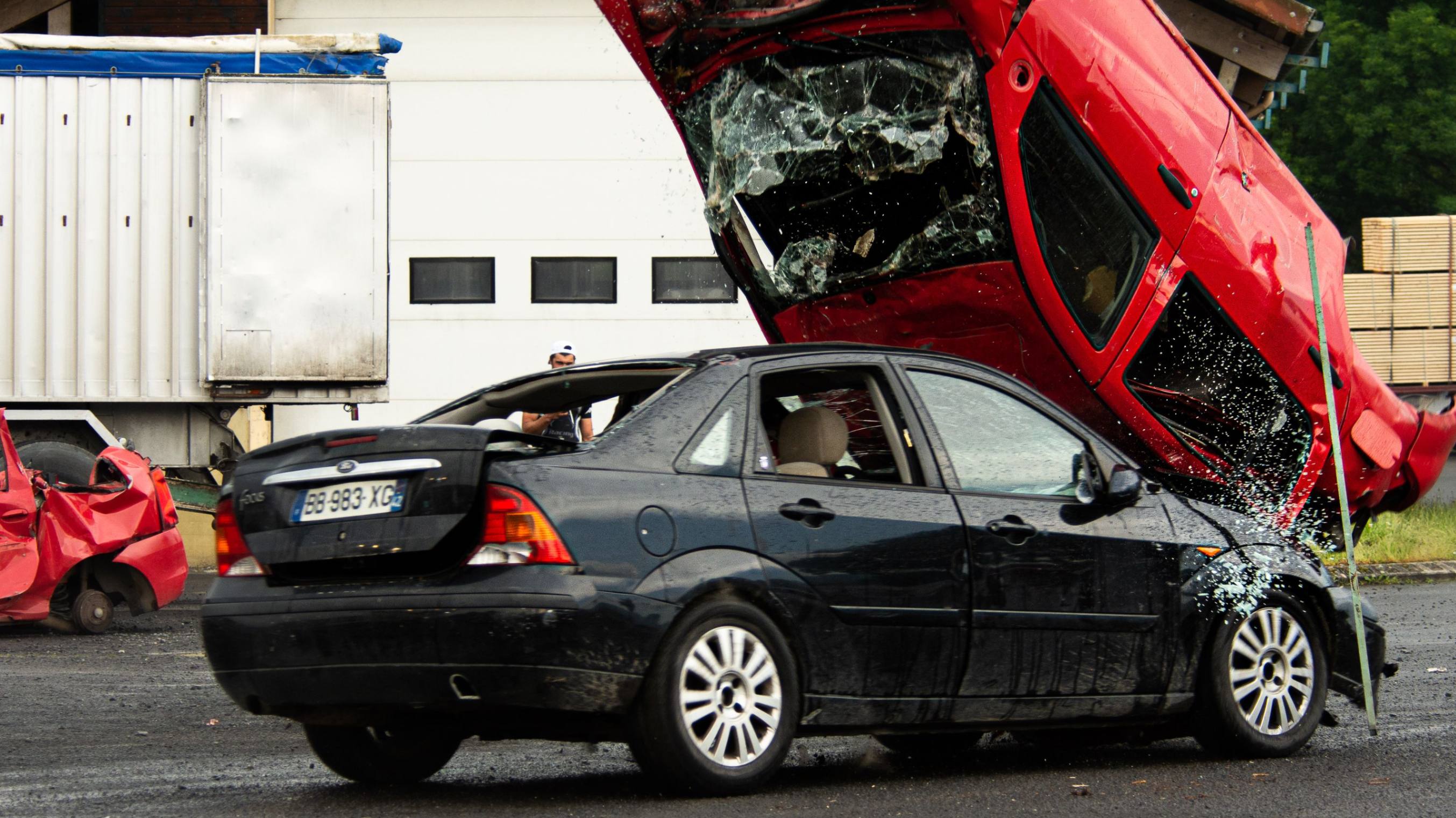
Modern cars are designed with crumple zones that deform during a serious collision. At first this can sound unsafe, because we often associate strength with protection. In a crash, the car's momentum must change. Increasing the time over which that change happens reduces the average force for the same change in momentum. Crumple zones absorb energy through controlled deformation and lengthen the stopping time. The passenger compartment is designed differently, with a strong structure to protect the occupants' space. Seatbelts and airbags use the same central idea: make the person stop more gradually and spread forces more safely.
The useful part of this physics is that it helps people predict and design real things. Engineers often begin with the same simplified model used in school, test where it works, then add more detail when measurements show that the real situation is more complicated.
The effect becomes clearer when it is reduced to measurable quantities: forces can change motion, energy is transferred between stores, and particles or fields provide a model for what cannot be seen directly. Those models let us predict what should happen when one variable changes, then test the prediction against observations or measurements.