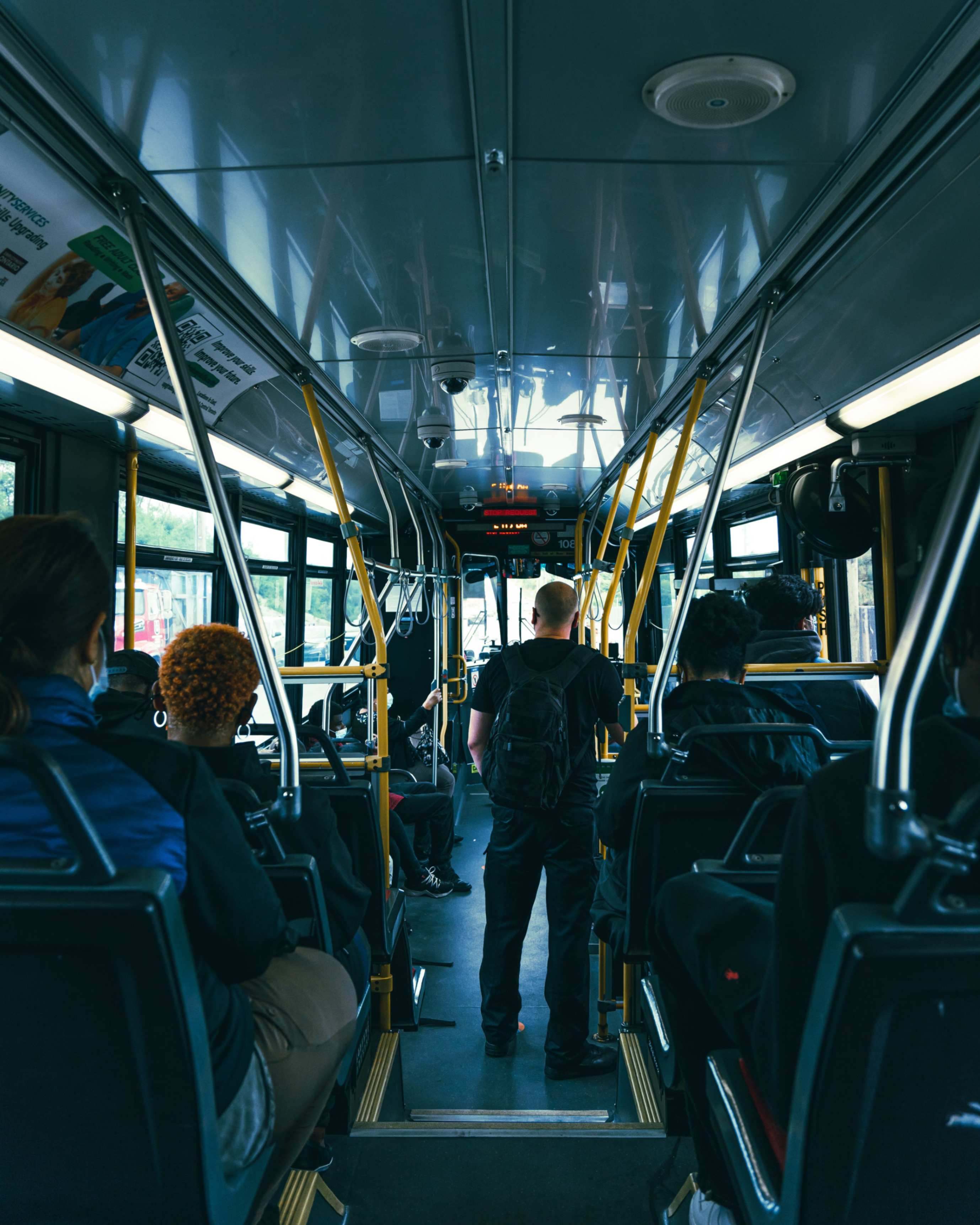
When a moving bus brakes sharply, your feet slow down with the bus but the rest of your body tends to keep moving forwards. This is inertia. Newton's first law says that an object continues at constant velocity unless a resultant force acts on it. Your body had the same forward velocity as the bus before braking. The bus exerts forces that slow the parts of you in contact with it. A seatbelt can provide the force needed to slow your upper body safely too. You are not being thrown forwards by a mysterious forward force; your body is continuing its previous motion while the bus slows beneath you.
You can spot the same idea in sport, transport and amusement rides. Designers predict how motion will change before building anything, because forces, momentum and energy affect comfort as well as safety. That is why seat belts, suspension, landing surfaces and ride restraints are physics applications, not just pieces of equipment.
The motion can be understood by adding the forces as vectors. If they balance, the resultant force is zero and the object stays at rest or continues at constant velocity; if they do not, it accelerates. Friction and drag transfer energy to the surroundings, usually as heating, so maintaining a steady speed can still require continuous work even when the speed itself is not changing.