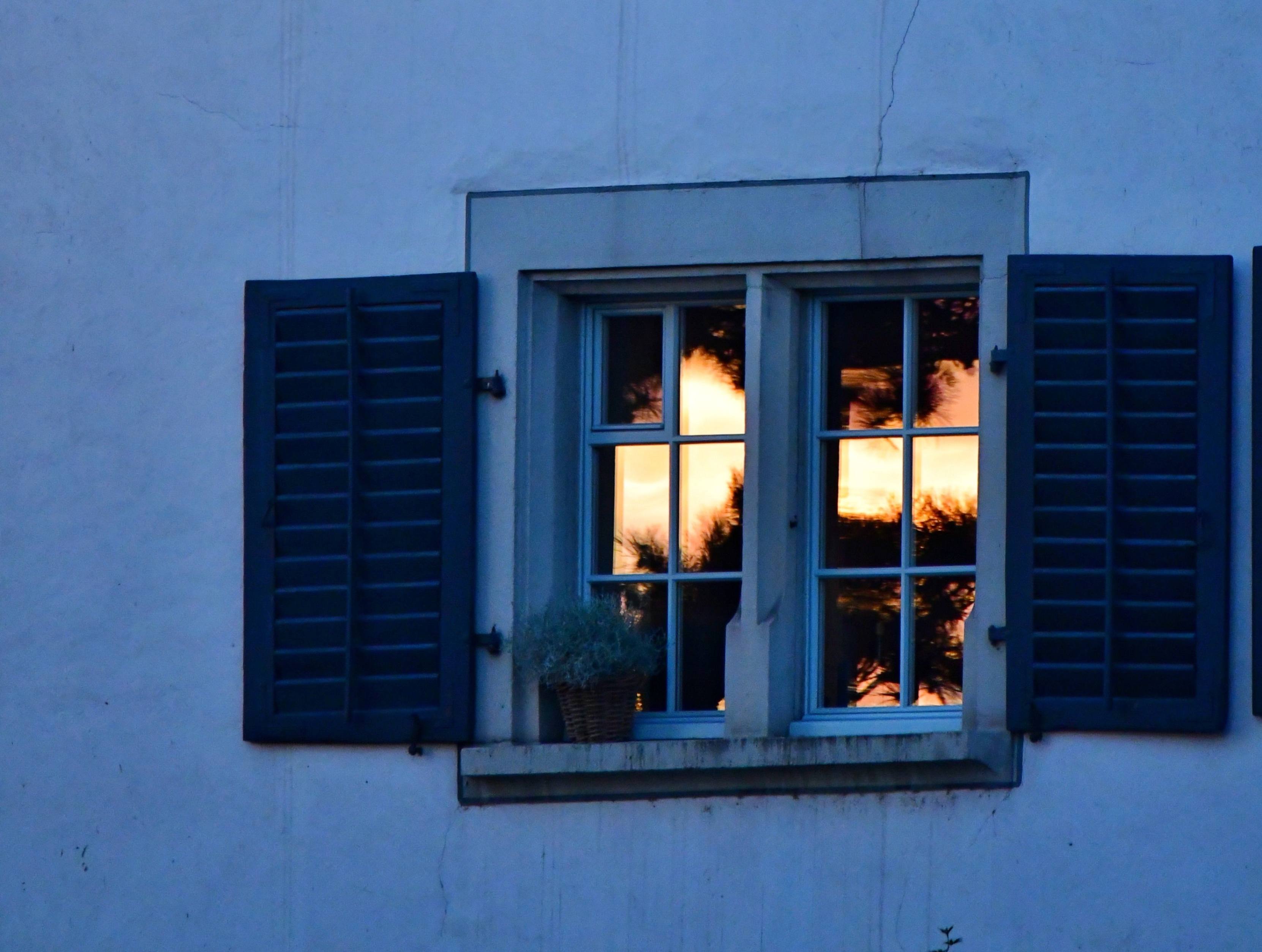
In daylight you can usually see through a window clearly. At night, the same glass can behave like a mirror and show your reflection. When light reaches glass, some is transmitted through it and some is reflected. During the day, bright light from outside travels through the window and usually overwhelms the weaker reflection from inside. At night the outside may be dark while the room is brightly lit. The reflected indoor light can then be much brighter than the light coming through from outside. The glass has not suddenly become more reflective. What changes is the relative intensity of the light reaching your eyes.
This is also a design problem. Cameras, glasses, screens, road signs and medical scanners all depend on controlling how electromagnetic waves are emitted, absorbed, reflected or refracted. A familiar object can therefore be a practical example of the same wave rules studied in class.
The effect becomes clearer when it is reduced to measurable quantities: forces can change motion, energy is transferred between stores, and particles or fields provide a model for what cannot be seen directly. Those models let us predict what should happen when one variable changes, then test the prediction against observations or measurements.