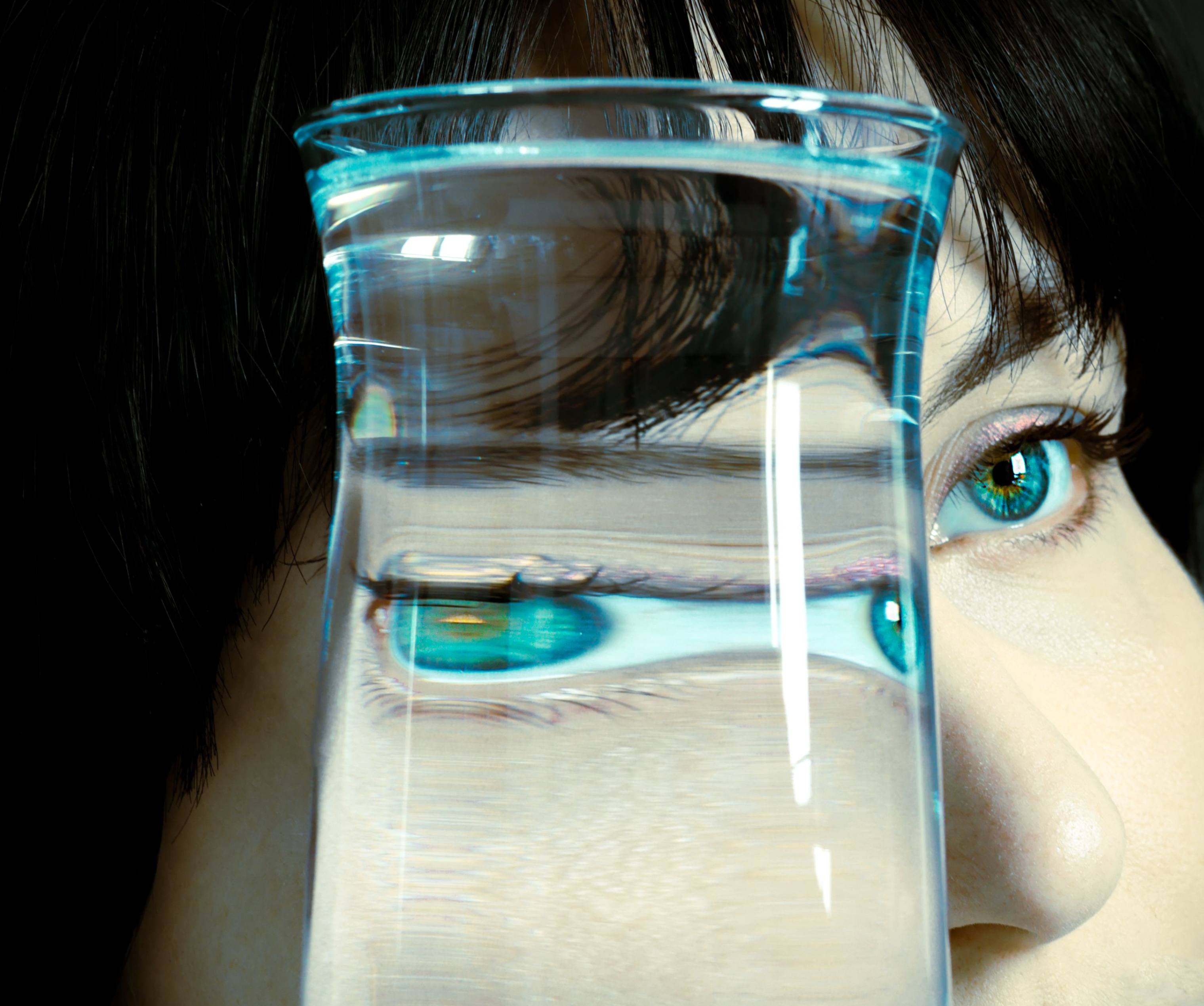
Put a straight straw into water and it can appear to bend at the surface. The straw has not changed shape; the light travelling from it has changed direction. Light travels at different speeds in different materials. When it crosses the boundary between water and air at an angle, its speed changes and the ray refracts. Your brain usually assumes light has travelled in a straight line. It traces the refracted rays backwards and places the underwater part of the straw somewhere different from its real position. The same refraction explains why a swimming pool can look shallower than it really is and why lenses can focus light.
The useful part of this physics is that it helps people predict and design real things. Engineers often begin with the same simplified model used in school, test where it works, then add more detail when measurements show that the real situation is more complicated.
The effect becomes clearer when it is reduced to measurable quantities: forces can change motion, energy is transferred between stores, and particles or fields provide a model for what cannot be seen directly. Those models let us predict what should happen when one variable changes, then test the prediction against observations or measurements.