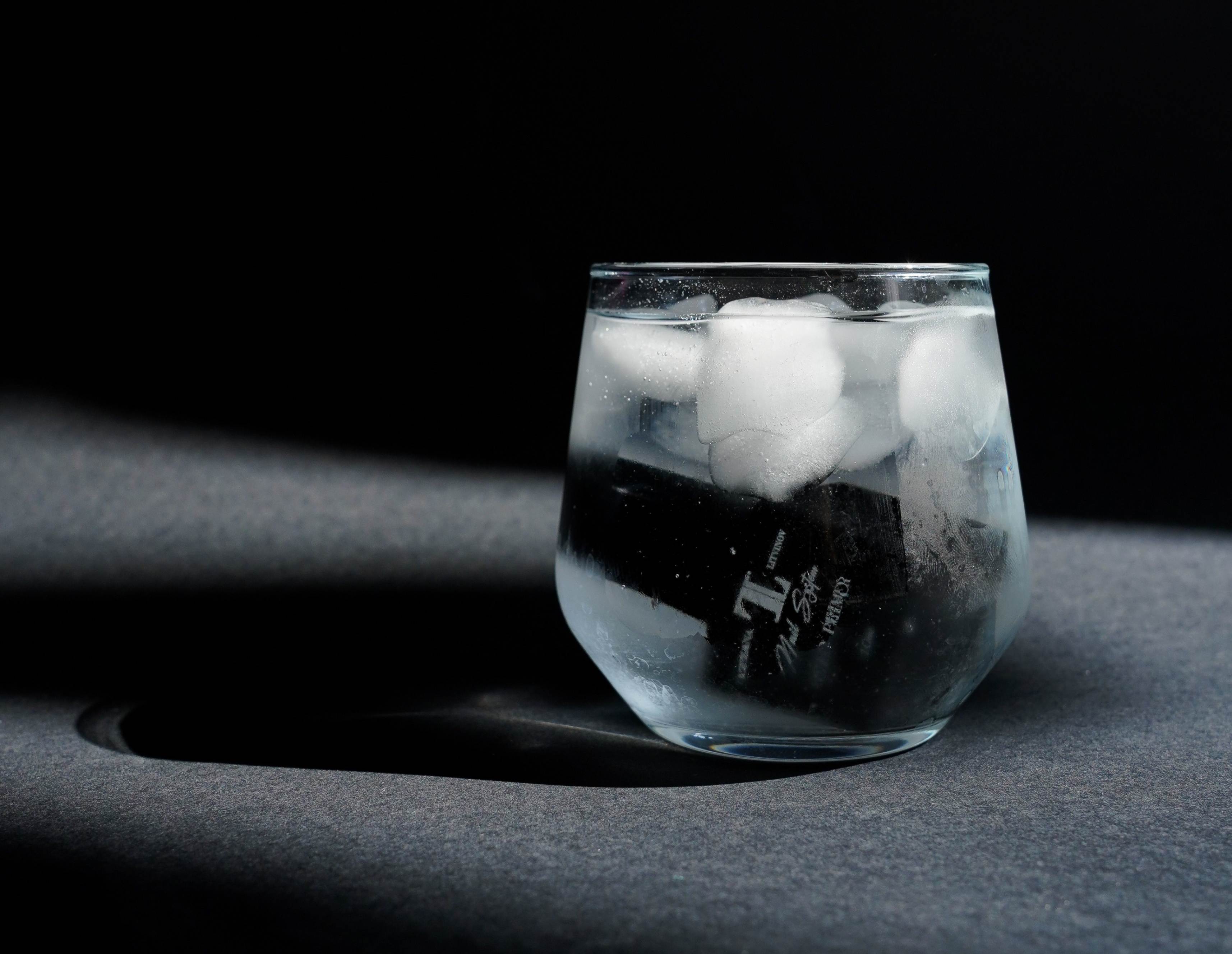
Most substances become denser when they freeze, but water behaves differently. Solid ice is less dense than liquid water, so it can float. When water freezes, its molecules form an open crystal structure that keeps them slightly farther apart than in the liquid. The same mass therefore occupies a larger volume. Density is mass divided by volume. Increasing the volume without changing the mass lowers the density. Because ice is less dense than water, it can displace enough water for upthrust to balance its weight before it is fully submerged.
Engineers use this relationship when choosing shapes and contact areas. Ships, hydraulic systems, tyres, foundations and cutting tools may look unrelated, but each is designed around how forces are spread through a material or fluid. Similar principles appear in nature too, from broad animal feet on soft ground to floating ice changing the conditions at the surface of a lake.
The effect becomes clearer when it is reduced to measurable quantities: forces can change motion, energy is transferred between stores, and particles or fields provide a model for what cannot be seen directly. Those models let us predict what should happen when one variable changes, then test the prediction against observations or measurements.