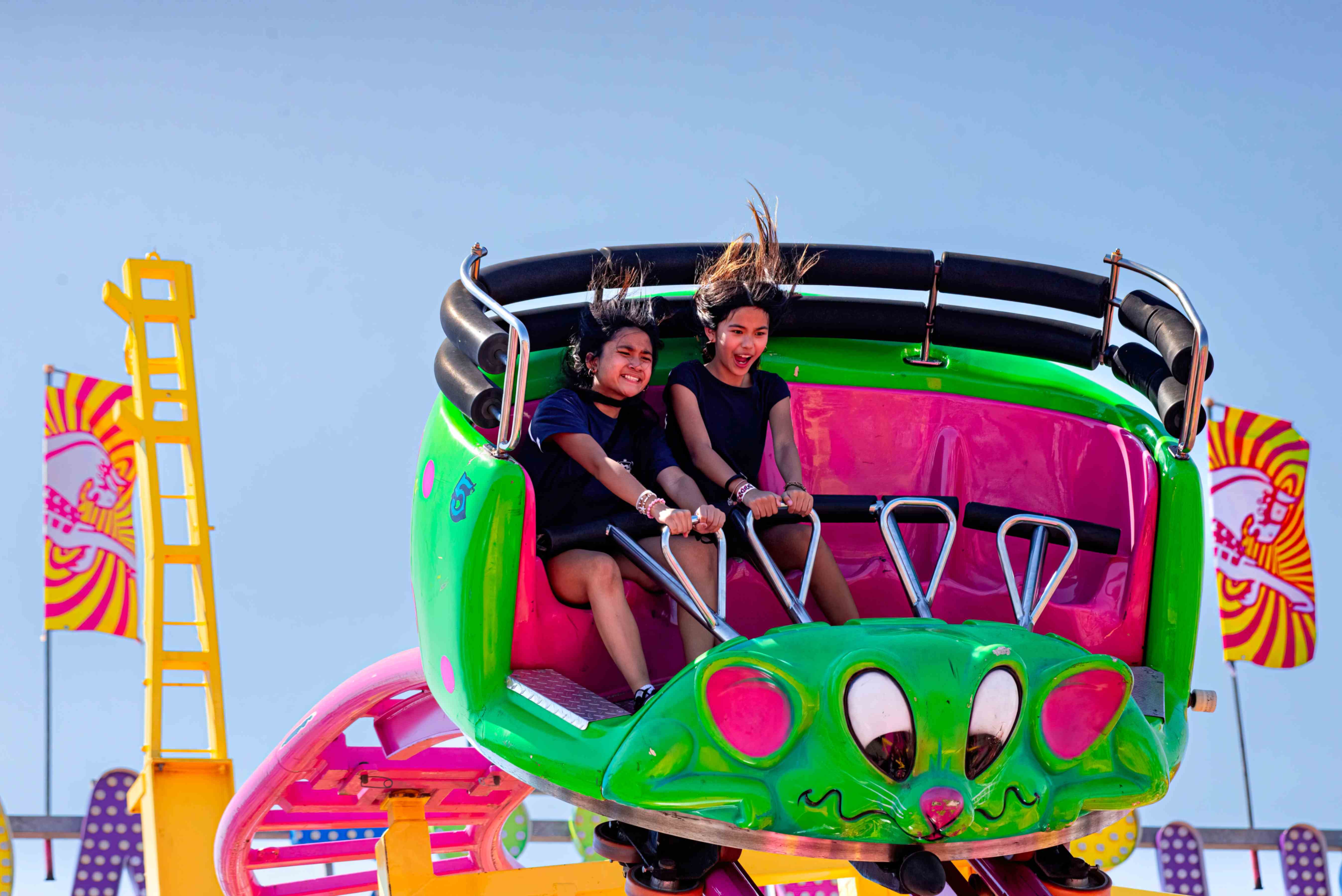
On a steep rollercoaster drop, your stomach can seem to float. Gravity is pulling you and the carriage downwards, so both can accelerate together. Normally a seat pushes upwards on you with a contact force. Your body interprets that support force as part of the feeling of weight. During a rapid downward acceleration, the seat may push on you less strongly. Your apparent weight decreases and you experience the floating sensation associated with near free fall. Gravity has not switched off. The unusual feeling comes from changes in acceleration and the contact forces acting on your body.
You can spot the same idea in sport, transport and amusement rides. Designers predict how motion will change before building anything, because forces, momentum and energy affect comfort as well as safety. That is why seat belts, suspension, landing surfaces and ride restraints are physics applications, not just pieces of equipment.
The motion can be understood by adding the forces as vectors. If they balance, the resultant force is zero and the object stays at rest or continues at constant velocity; if they do not, it accelerates. Friction and drag transfer energy to the surroundings, usually as heating, so maintaining a steady speed can still require continuous work even when the speed itself is not changing.