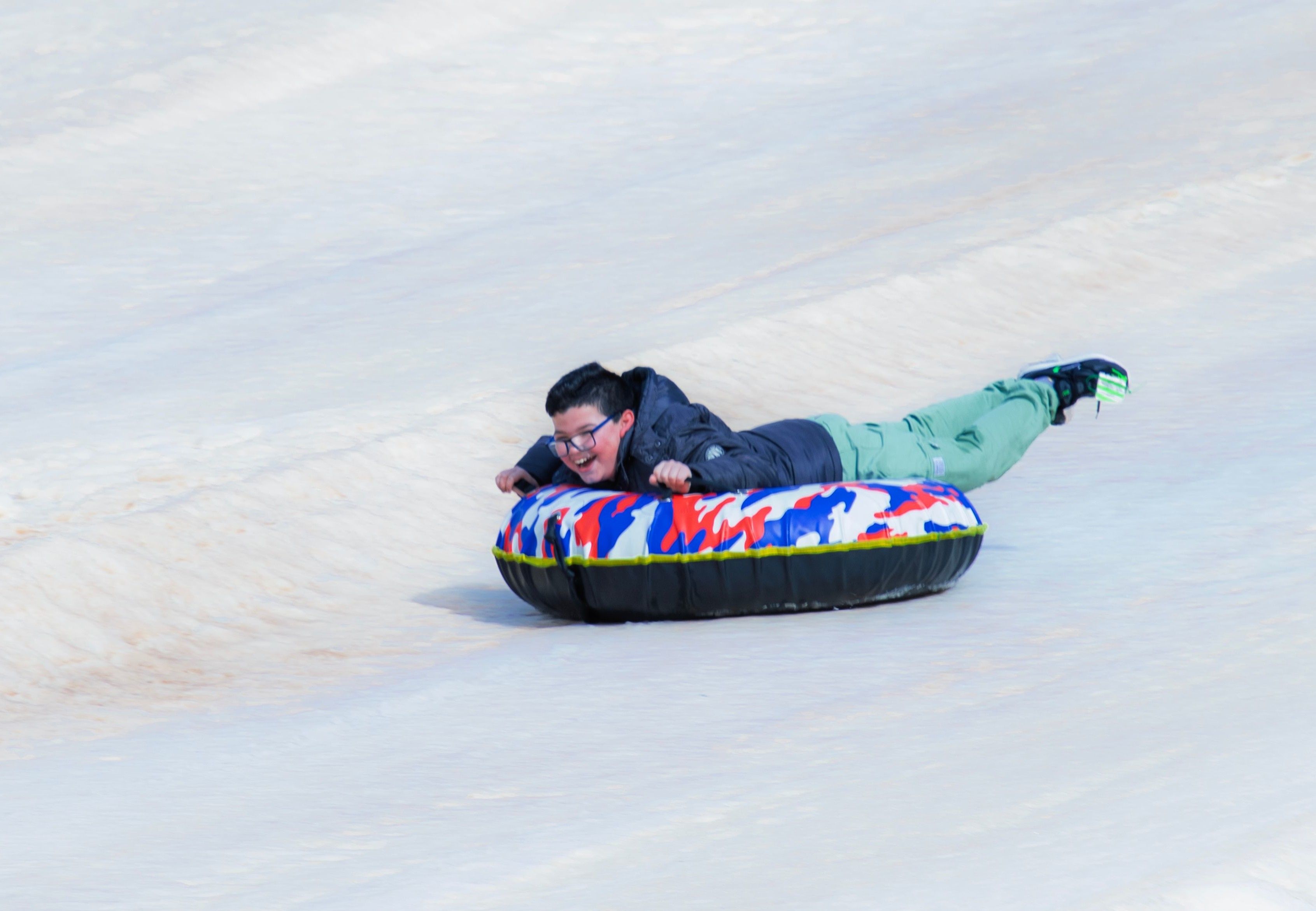
Ice has a low coefficient of friction, especially when a very thin mobile layer of water-like molecules is present at its surface. That layer can reduce the grip between a shoe or skate and the ice. Friction also produces heating, and pressure and temperature can influence the surface conditions. The exact microscopic explanation is more complicated than the old idea that pressure alone always melts the ice. With less friction, it is harder for your foot to push backwards on the ground without sliding. That makes walking and stopping difficult. Skates exploit the low friction to glide, while textured soles and grit are used when we want more grip.
Engineers use this relationship when choosing shapes and contact areas. Ships, hydraulic systems, tyres, foundations and cutting tools may look unrelated, but each is designed around how forces are spread through a material or fluid. Similar principles appear in nature too, from broad animal feet on soft ground to floating ice changing the conditions at the surface of a lake.
The motion can be understood by adding the forces as vectors. If they balance, the resultant force is zero and the object stays at rest or continues at constant velocity; if they do not, it accelerates. Friction and drag transfer energy to the surroundings, usually as heating, so maintaining a steady speed can still require continuous work even when the speed itself is not changing.